



Description
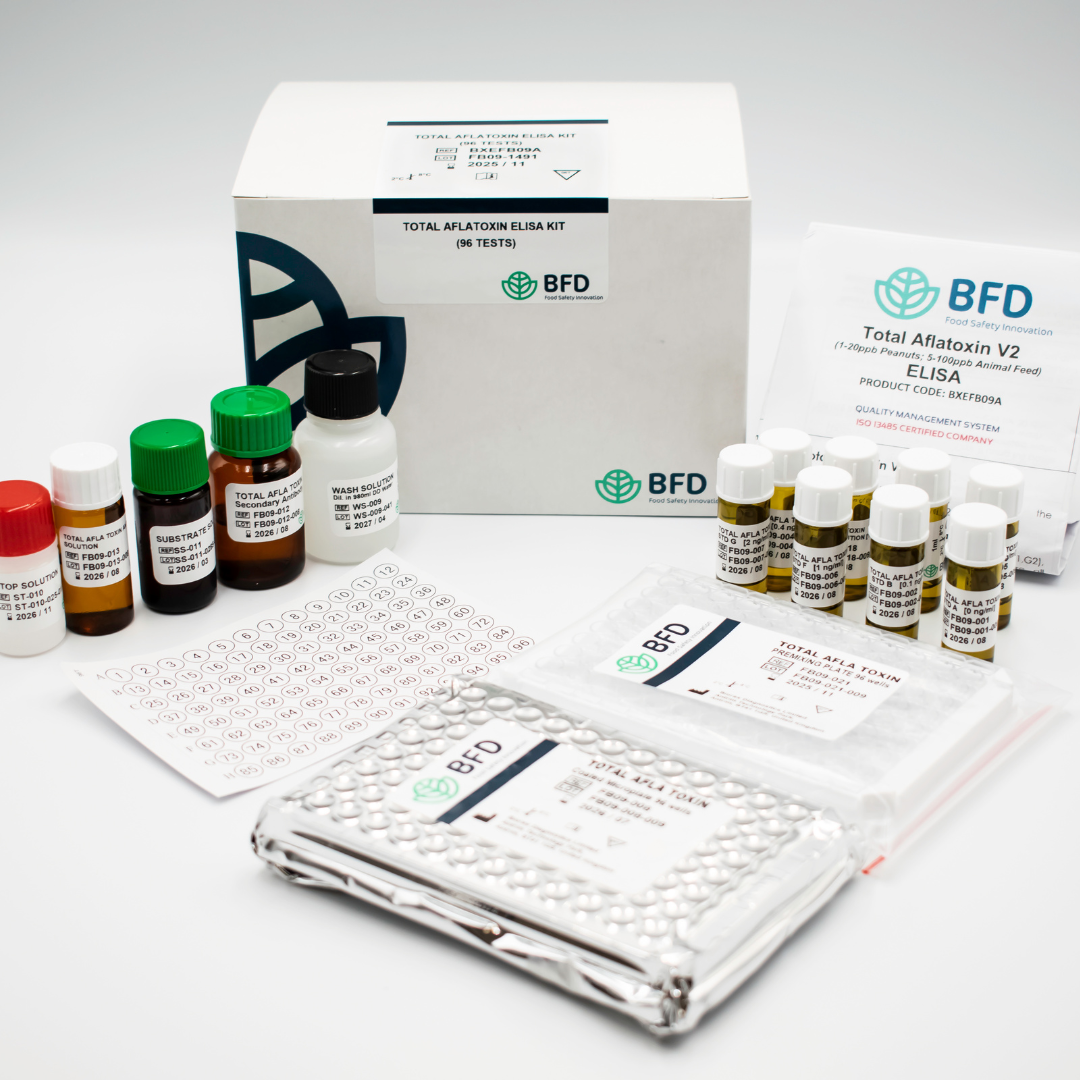
Total Aflatoxin ELISA Ordering Information
| Cat Code. | Method | Assay Time | Limit of Detection (LoD) | Cross Reactivity |
| BXEFB09A | ELISA 96T | 35mins | Peanut: 1ppb Animal Feed/Cereal: 2ppb |
This test has the ability to detect the sum of Aflatoxin B1, B2, G1, G2. |
There are 4 main types of aflatoxin (B1, B2, G1, G2), belonging to the mycotoxin group. They are all metabolites of the fungi Aspergillus flavus and Aspergillus parasiticus species. Of these types, B1 is the most common and toxic to both humans and animals. As these moulds are commonly found throughout the world, food can become easily contaminated, with an estimated 25% of world crops affected on a yearly basis. The detection of aflatoxins is important as they are both genotoxic and carcinogenic. Therefore, they are a problem for the food industry, as possible contamination within grains and nuts leads to this harmful substance entering the human food chain.
As well as poisoning (aflatoxicosis) humans directly through consumption, animal feed can be contaminated, causing illness to cattle/poultry and then onto humans. Potential hazardous effects include jaundice, cholestasis, haemorrhaging, coma, liver disease, and cancer.
As a result, worldwide regulatory authorities have placed limits on acceptable levels of aflatoxin. The EU has set levels of B1 at 2 µg/kg and total aflatoxin at 4 µg/kg, while WHO/Codex has set aflatoxin limits ranging from 0.5–15 µg/kg depending on food type. With regards to animal feed, there is a far greater allowance and variation of the maximum allowed aflatoxin concentrations, depending on feed type and usage: EU range is 5–15 ppb, US 20–300 ppb, Japan 20 ppb, China 10–30 ppb, and Indonesia 20–50 ppb.