


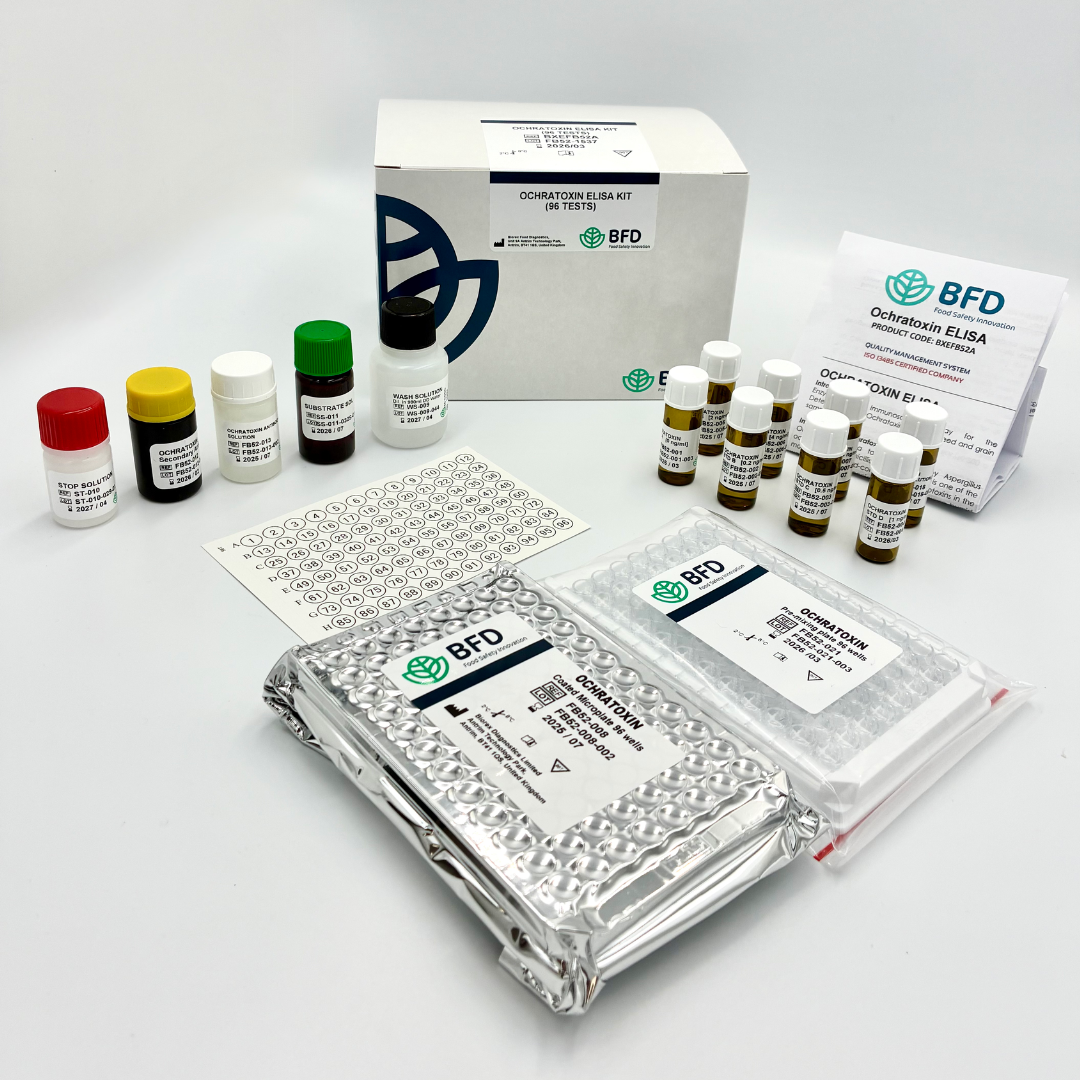
Description
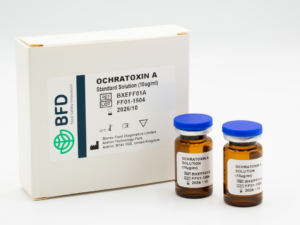
Ochratoxin Ordering Information
| Cat Code. | Method | Assay Time | Limit of Detection (LoD) | Cross Reactivity |
| BXEFB52A | ELISA 96T | 35mins | Feed/Grains: 1.2ppb | Ochratoxin A 100% |
Ochratoxin A is a toxic secondary metabolite produced by Aspergillus ochraceus and Penicillium verrucosum. It is recognised as one of the most significant food-contaminating mycotoxins globally due to its widespread occurrence and persistence in agricultural commodities. Aspergillus species typically thrive in warm, humid environments, while Penicillium verrucosum is more commonly associated with cooler, temperate climates. Together, these fungi contribute to the broad distribution of ochratoxin contamination across diverse food supply chains.
Because these fungi are ubiquitous in nature, the risk of contamination in both foodstuffs and animal feed is widespread and difficult to eliminate entirely. Ochratoxin A has been detected in a variety of commonly consumed products, including maize, barley, wheat, oats, dried fruit, coffee, wine, and numerous other cereal-based and plant-derived foods. This wide occurrence makes it a major concern for global food safety authorities.
Exposure to ochratoxin A is associated with serious health risks, including nephrotoxicity, immunotoxicity, and potential carcinogenic effects, leading to strict regulatory oversight. To protect consumers, the European Union has established maximum residue limits for this toxin in several food categories. These include 5 ppb in cereals, 2 ppb in wine, and 10 ppb in dried fruits and instant coffee.
Effective monitoring and control of ochratoxin A levels are therefore essential to ensure compliance with food safety regulations and to minimise public health risks. Analytical testing methods, including immunoassays and chromatographic techniques, are widely used to detect and quantify contamination in food and feed products. Continuous surveillance, combined with good agricultural and storage practices, plays a key role in reducing contamination and maintaining the safety and quality of the global food supply.